Category Archives: Geopolitics

The Empire of Silence Before the Break

The Empire of Silence Before the Break

By Calvin P. Tran

This past Saturday, March 28, millions gathered across the United States in “No Kings” demonstrations—part of a decentralized wave spanning thousands of events in cities large and small.

Yet America is still running.
Lights on.
Streets full.
Markets open.

Only one thing dims:
trust.

Trump did not summon the storm.
He stepped into it—
or perhaps,
refused to step away.

“No Kings.”
Not just a slogan.
A reaction.
A signal
that something feels too concentrated,
too distant
to touch.

In New York City, people move quickly,
eyes forward, conversations unfinished.
In Chicago, chants rise, then thin into scattered voices.
In San Francisco, lines form—orderly, patient, uncertain.
In Washington, D.C., words are measured,
as if volume itself carries risk.

Power rarely welcomes resistance.
Trump signs.
He does not hesitate.
He does not need to.
The system around him
has learned the rhythm.

“Power isn’t blind.
It chooses what not to see.”
— Trump, a Curious Tale

The crowd is not uniform.
But it moves—
sometimes together,
sometimes apart.

What makes it difficult to read
is not its size,
but its lack of a single voice.

A man holds a sign:
“No Kings except Elvis.”
Half humor.
Half deflection.
But also a way
to shrink power
into something laughable.

Trump speaks as if the system still holds.
Many in the crowd act as if it no longer does.
That distance
is where tension forms.

“No Kings” is not only about one man.
It reflects a broader unease:
that decisions are made
in places people cannot see
or reach.

“People don’t revolt because they’re poor.
They move when they feel they no longer matter.”
— Trump, a Curious Tale

Numbers don’t settle this.
Millions, perhaps.
Thousands of protests—
from New York City
to towns rarely named.

Scale is visible.
Sentiment is not.

Scale is surface.
What matters is its nature.

It spreads—
like a thought,
like a doubt,
like something people feel
before they can explain it.

Trump does not need to control everything.
Only to maintain enough continuity
for the system to keep functioning—
even as something within it shifts.

That is often how strain builds—
not through collapse,
but through endurance.

Somewhere,
someone marches for the first time.
Somewhere else,
someone quietly disengages.

They are not coordinated.
History connects them anyway.

“An empire rarely fears its enemies.
It watches its own confidence more closely.”
— Trump, a Curious Tale

Trump still speaks of order.
But order itself is being redefined.
Less about stability,
more about control.

And once control becomes visible,
it invites scrutiny.

The cities are not burning.
There is no spectacle of collapse.

Only pressure—
gradual,
unresolved.

Pressure rarely announces itself.
It appears in small sentences:
“Something isn’t right.”

Trump continues.
The system continues.
Everything continues.

But not in the same way.

“History doesn’t always turn at collapse.
Sometimes it shifts
while everything still appears intact.”
— Trump, a Curious Tale

“No Kings” is not a conclusion.
It is an indicator.

A sign that distance
between institutions
and public feeling
is widening.

And when that distance grows,
something subtle happens:
people stop interpreting reality
the same way.

Trump will keep speaking.
So will the crowd.

But increasingly,
they are speaking
past each other.
Kharg Island and Global Oil Supply

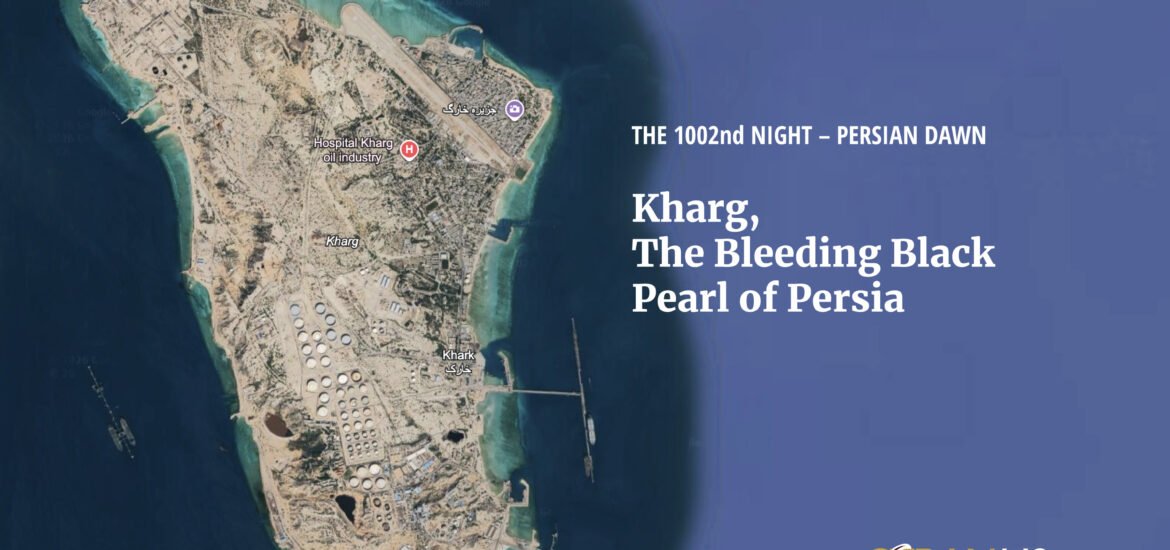
Kharg – The Bleeding Black Pearl

Kharg – The Bleeding Black Pearl of Persia

By Calvin P. Tran

On the one thousand and second night, when the oil lamps in the palace had burned low and the desert wind drifted through the cold stone corridors, she bowed before the king and began once more:

“Your Majesty, tonight’s tale begins on a small island in the Persian Gulf, where the sea is deep blue, yet the earth beneath is as black as tar.
That island is called Kharg Island.”

(more…)

JD Vance: Olympic 2026

Milano 2026 Winter Olympics–

when the American flag stirs more storm than the fireworks

By Calvin P. Tran

At San Siro Stadium, Milan, on February 6, 2026, the opening ceremony of the Milano–Cortina Winter Olympics delivered a brief, brutal piece of theater.

The U.S. delegation marched in—white Ralph Lauren uniforms gleaming, stars-and-stripes flag snapping in the wind. The 65,000-strong crowd erupted in cheers, roaring for the ice-and-snow heroes like they were gods of winter.

Then the jumbotron panned to the VIP box. Vice President JD Vance and his wife Usha appeared, waving tiny flags, smiling politely. In seconds the cheers flipped: boos, whistles, jeers rolled through the stadium like a sudden Alpine gale [1].

Not the first time a politician has been jeered at the Games. But in Italy—the land of opera and tragedy—it felt symbolic. Politics had crashed the party that, for twenty centuries, pretended to belong only to humanity.

From Air Force One

Trump tiên sinh sounded genuinely surprised: “That’s surprising because people like him… He wasn’t booed in this country” [2]. But Europe is not America. Here Vance stood for an administration that has warped the image of the United States—from iron-fisted immigration to pressure tactics and open threats against allies [3].

NBC’s U.S. broadcast did what it could. The audio mix softened the boos into background murmur, a gentle remix of reality [4]. The rest of the world heard it clearly. Americans heard… something smoother.

Outside the stadium, Milan was far from calm. For days thousands had gathered in protest against the presence of U.S. Immigration and Customs Enforcement (ICE) agents acting as security detail for the American delegation. Whistles, chants of “ICE out,” signs reading “Defend Minneapolis” filled the streets [5].

On February 6, hundreds marched to Piazza Leonardo da Vinci, singing Bruce Springsteen anthems while mocking what they called “the militia that kills”—a direct reference to high-profile ICE-related shootings in the United States, including the fatal incident in Minneapolis. Milan’s mayor, Beppe Sala, was blunt: “This is a force that kills people… Of course they are not welcome in Milan” [6].

By February 7, the protests escalated. Thousands marched from Piazzale Medaglie d’Oro toward the Olympic Village. A splinter group hurled flares and bottles, prompting police intervention [7].

The anger wasn’t only about ICE. Demonstrators also targeted the ballooning cost of the Games, environmental damage, and Israel’s participation—adding jeers for the Israeli team during the parade of nations [8].

The American delegation—led by Vance, joined by Secretary of State Marco Rubio and Ambassador Tilman Fertitta—tried to stay composed. Vance met Prime Minister Giorgia Meloni, visited athletes, and told them: “Everybody is rooting for you” [9]. Yet some U.S. competitors felt the chill. Freestyle skier Hunter Hess admitted mixed feelings about representing the country at this moment: “There’s a lot going on that I’m not a big fan of… It’s tough to represent right now” [10].

In Trump, a Curious Tale, this becomes a small but viciously ironic chapter: power believes it can wave the flag anywhere and be welcomed. The crowd has its own voice.

“When the flag flies, it doesn’t always carry glory.
Sometimes it drags shadow behind it.”
— Trump, Kỳ truyện

Glory for the athletes. Fury for the politics. The American flag in Milan stirred more storm than the fireworks.

And then, in the snowy Italian haze, power keeps smiling while the crowd keeps booing. No finale. Only an open ending—leaving the world to judge, and to sigh quietly over this endless Olympic drama.

Citations
  1. Reuters; The Guardian – Israel team, U.S. Vice President Vance booed at Milan Games opening ceremony (2026)
  2. Time Magazine – J.D. Vance Is Booed at the Winter Olympics (2026)
  3. NPR – U.S. steps onto Olympic stage at a time when its image sparks concern (2026)
  4. NBC News; The Washington Post; The Business Standard; YouTube – Two Versions of One Olympic Moment After JD Vance Is Booed (2026)
  5. Reuters; BBC – Anti-ICE protesters rally in Milan ahead of opening ceremony (2026)
  6. Italian media (La Repubblica, Corriere della Sera); YouTube compilations – Statements by Mayor Beppe Sala on ICE presence (2026)
  7. The Hill; USA Today – Police use tear gas, water cannons on protesters near Winter Olympics venue (2026)
  8. Middle East Monitor – Jeers target US, Israeli delegations during Winter Olympics opening ceremony (2026)
  9. Yahoo Sports – Everybody is rooting for you’: VP Vance leads US Olympics delegation (2026)
  10. Los Angeles Times – Amid protests over ICE at the Olympics, U.S. athletes brace for hostile crowds (2026)