

When Numbers Do Not Lie

When Numbers Do Not Lie

There are things in politics that can bend.
Words.
Memory.
Even truth.
But numbers—
do not.

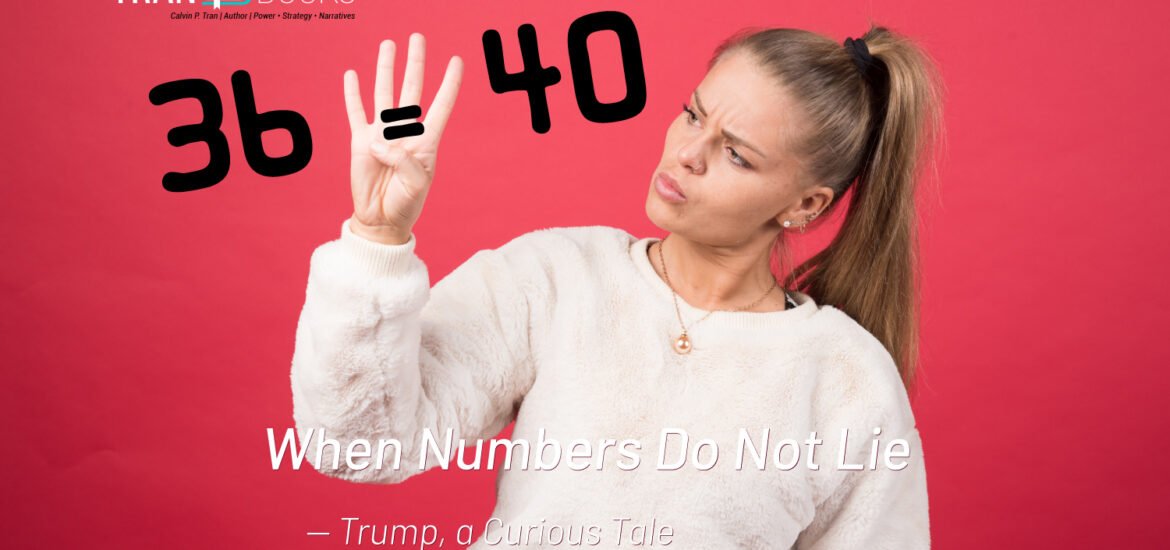
A six-day survey.
Ending April 20.
36%.
No rise.
No fall.
Just still—
like a needle that refuses to move.

Trump does not speak of numbers.
He speaks of victory.
But numbers do not understand victory.
They only count.

Karoline Leavitt steps forward.
Not to explain.
But to defend.
She says Trump keeps his word.
She says it
with a certainty
that does not require proof.
In Washington, belief sometimes needs no evidence.
Only repetition.

“In politics, a statement does not need to be true.
It only needs to outlast doubt.”

But the number remains.
36%.
Small.
Yet large enough
to reveal something larger:
confidence no longer moves.

They ask about temperament.
Only 26% say Trump is calm.
A quiet figure.
Like a collective frown.
Even among his own,
certainty is no longer intact.

They ask about mental sharpness.
51% say it has declined.
Not an accusation.
A perception.
But in politics,
perception often outweighs proof.

The Iran conflict stretches on.
Gas prices rise.
Other numbers begin to speak.
36% support the strikes.
26% say they are worth the cost.
These figures do not shout.
They whisper.
But enough
to unsettle certainty.

Trump speaks of strength.
Leavitt speaks of consistency.

The public looks at outcomes.
And between words and outcomes—
there is a gap.
Not wide.
But deep.

Elsewhere, another number appears.
60%.
For a pope.
Against 36%.
Not a competition.
Yet it reads like one.
Between trust
and power.

Leavitt says the media is wrong.
Says they do not understand.
Perhaps.
But numbers do not read the news.
Do not watch television.
Do not argue.
They simply remain—
waiting to be seen.

“Power may argue with the press.
It cannot argue with repetition in numbers.”

In a polarized world,
everything can split in two.
Truth.
Perception.
Belief.
But a number—
remains one.

Trump is not the only one being measured.
He is where all measurements converge.
A point.
A percentage.
A metric.
And what matters is not that the number is low.
It is that it does not move.

Not rising—
because belief does not grow.
Not falling—
because doubt has reached its floor.
A suspended state.
Like a nation
waiting for a decision
without knowing who will decide.

Karoline Leavitt continues to speak.
Trump continues forward.
The conflict continues.
And the numbers—
remain.
Not supporting.
Not opposing.
Only recording.

“The most unsettling moment is not when numbers turn against you.
It is when they stand still—
and nothing can move them.”


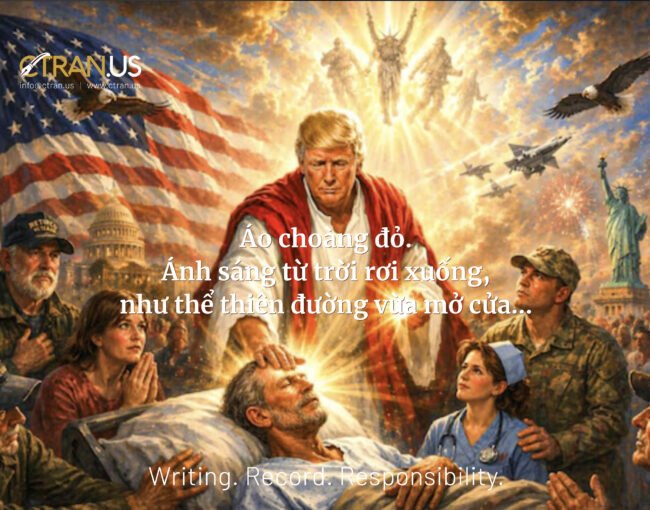
Bàn tay đặt lên trán

Bàn tay đặt lên trán

Calvin P. Tran | Trump, Kỳ truyện

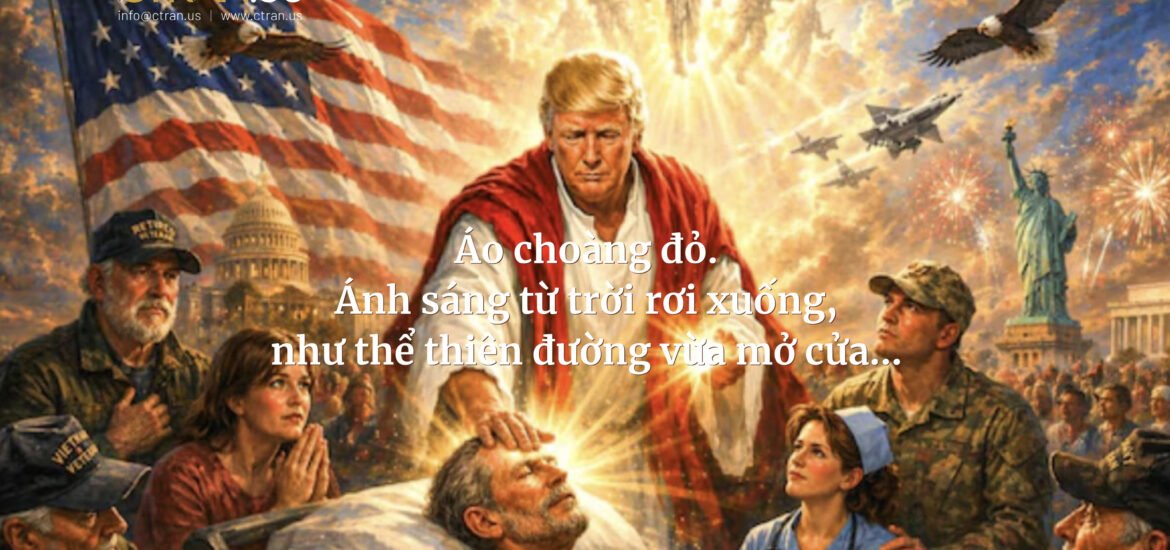
Trump tiên sinh đứng đó.
Áo choàng đỏ.
Ánh sáng từ trời rơi xuống, như thể thiên đường vừa mở cửa.

Phía sau là cờ.
Phía trước là người bệnh.

Xung quanh là những ánh mắt chờ đợi — không phải chờ một chính sách, mà chờ một phép màu.

(more…)

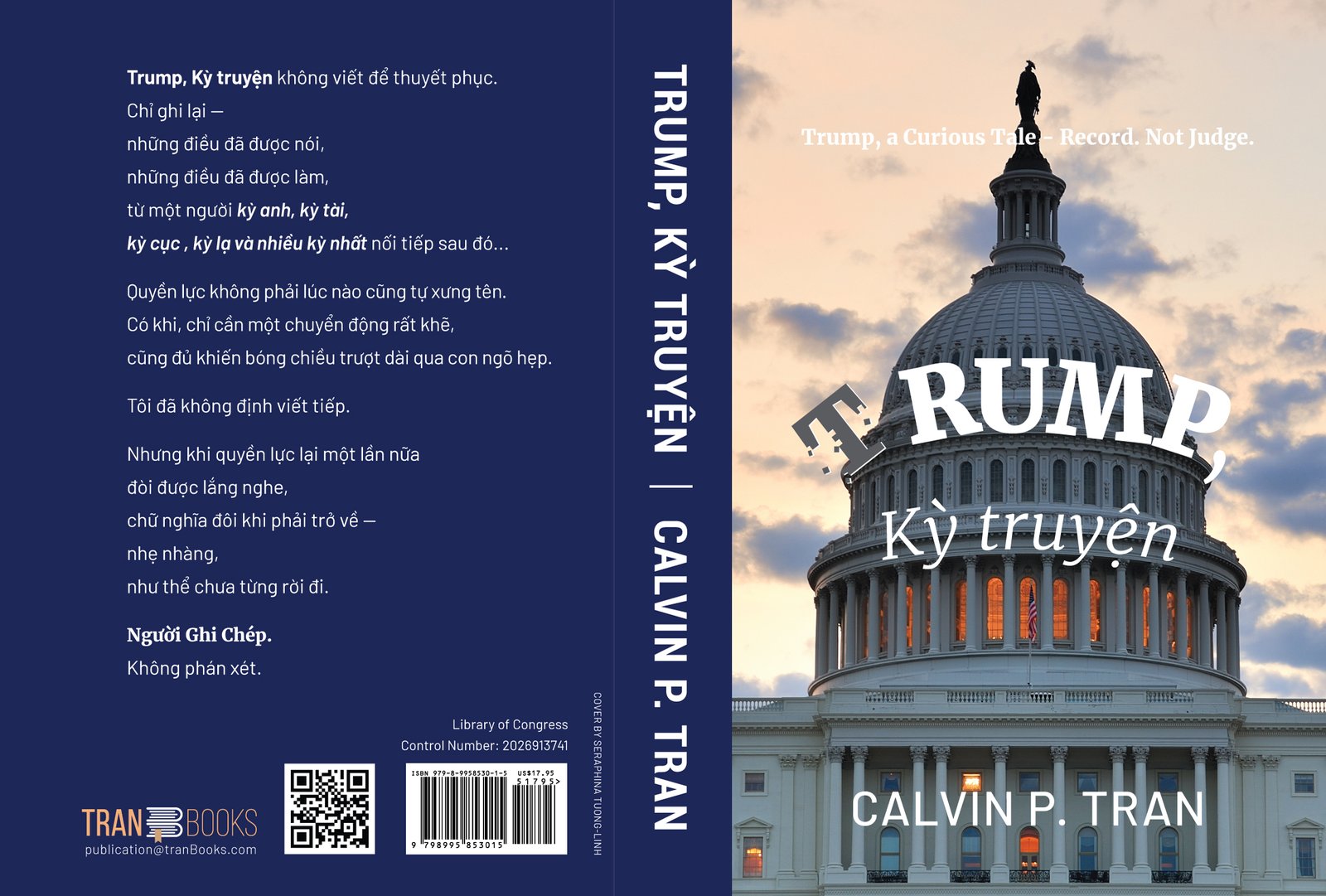
Trump, Kỳ truyện

ĐỌC THỬ

Nước Mỹ: Những Khoảng Trắng

— Calvin P. Tran Đọc thử là không gian dành cho những đoạn trích được chọn lọc từ các tác phẩm của Tran Books.

Nước Mỹ: Những Khoảng Trắng Cover

Thay vì trình bày toàn bộ nội dung, mỗi bài đọc thử chỉ mở ra một phần của cấu trúc tư tưởng, giọng văn và không khí của cuốn sách — đủ để người đọc cảm nhận hướng đi của tác phẩm trước khi bước sâu hơn vào toàn bộ hành trình.

Những đoạn được đăng tải không nhằm tóm tắt cuốn sách, mà để giữ lại nhịp điệu nguyên bản của việc đọc: chậm rãi, suy ngẫm và có khoảng trống cho người đọc tự diễn giải.

Tran Books lựa chọn những đoạn tiêu biểu để người đọc cảm nhận giọng văn, chủ đề và tinh thần của cuốn sách, thay vì công bố toàn bộ nội dung rời rạc trên nền tảng trực tuyến.

Đọc Trump, Kỳ truyện

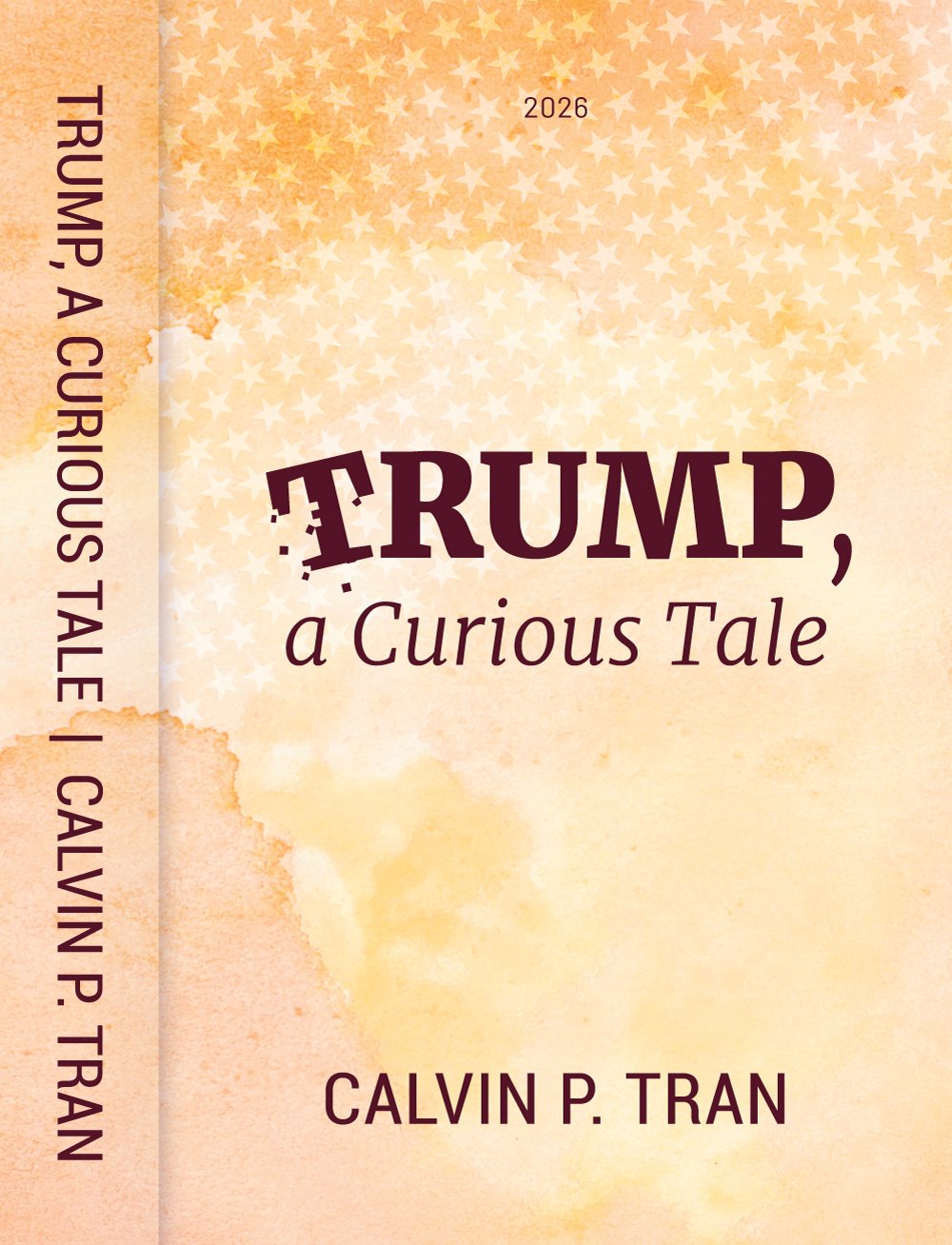
Trump, a Curious Tale

An Unusual Tale of Power
— Calvin P. Tran
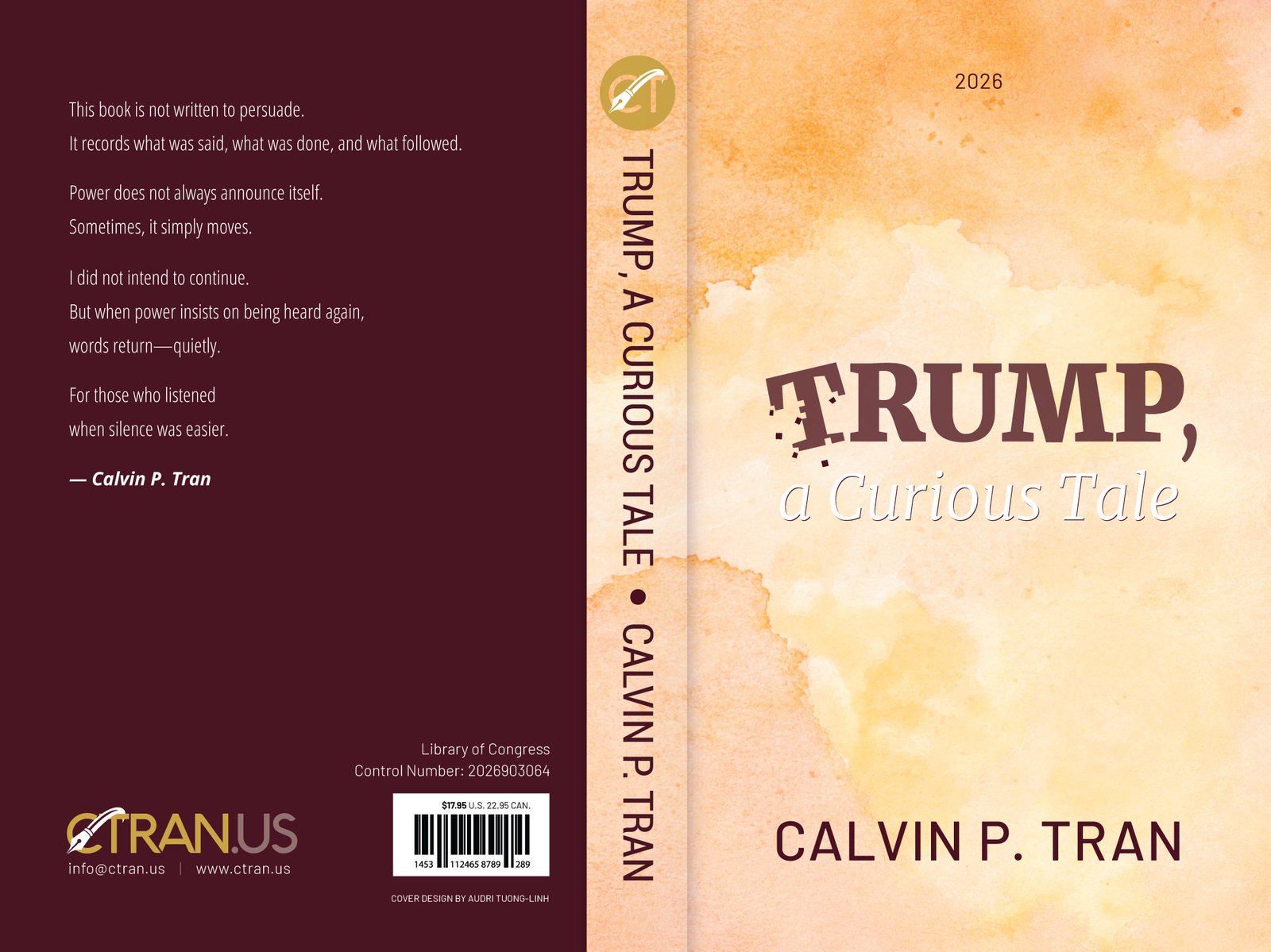
Book Cover Trump a Curious Tale

This book tells a curious tale — one that resists easy judgment.

In Trump, a Curious Tale, Trump is not presented for reverence, but for observation. What emerges is less a figure of reverence than something far more peculiar: a moment when power steps forward without disguise and politics sheds much of its inherited solemnity.

Every era has its stories of power. Not every era allows power to speak so openly about itself.

The central figure here is not a symbol or a myth. He is a man entering politics with theatrical instinct, unwavering confidence, and a belief that rules exist to be tested.

When President Donald J. Trump signed his first executive orders, the world did not collapse. No alarm sounded. History did not turn overnight. Yet within that calm, a different rhythm surfaced — one in which speed outweighed consensus, volume displaced precision, and institutions struggled to match acceleration.

This work does not argue morality. It examines how power is exercised, displayed, and legitimized through public emotion. Here, promises need not be fulfilled — only compelling enough to sustain belief. Truth need not be denied — only drowned in louder proclamations.

This tale moves through institutions attempting to hold their ground, allies adjusting, opponents waiting, and a public both skeptical and captivated.

Trump does not stand outside his era. He is both its product and its catalyst — revealing existing fractures with unusual clarity.

A reminder appears at the threshold:

“Power rarely limits itself.
It stops only when people remain lucid enough to recognize what they are giving it.”

— Trump, a Curious Tale

The cost of that offering is borne not only by the present —
but by the memory of the future.

Trump, a Curious Tale
Trump, the Family
Proximity and Distance
When Truth Arrives too Late
Does Trump See This?
The Signature on the Dollar
Đọc thử Miễn phí
Read a Free sample

Đêm Thứ 1002 - Bình minh Ba TưRead Sample
ROI - Return on IntegrityRead Sample
Trump, a Curious TaleRead Sample
Saigon Em & TôiRead Sample


Cùng Tác giả